
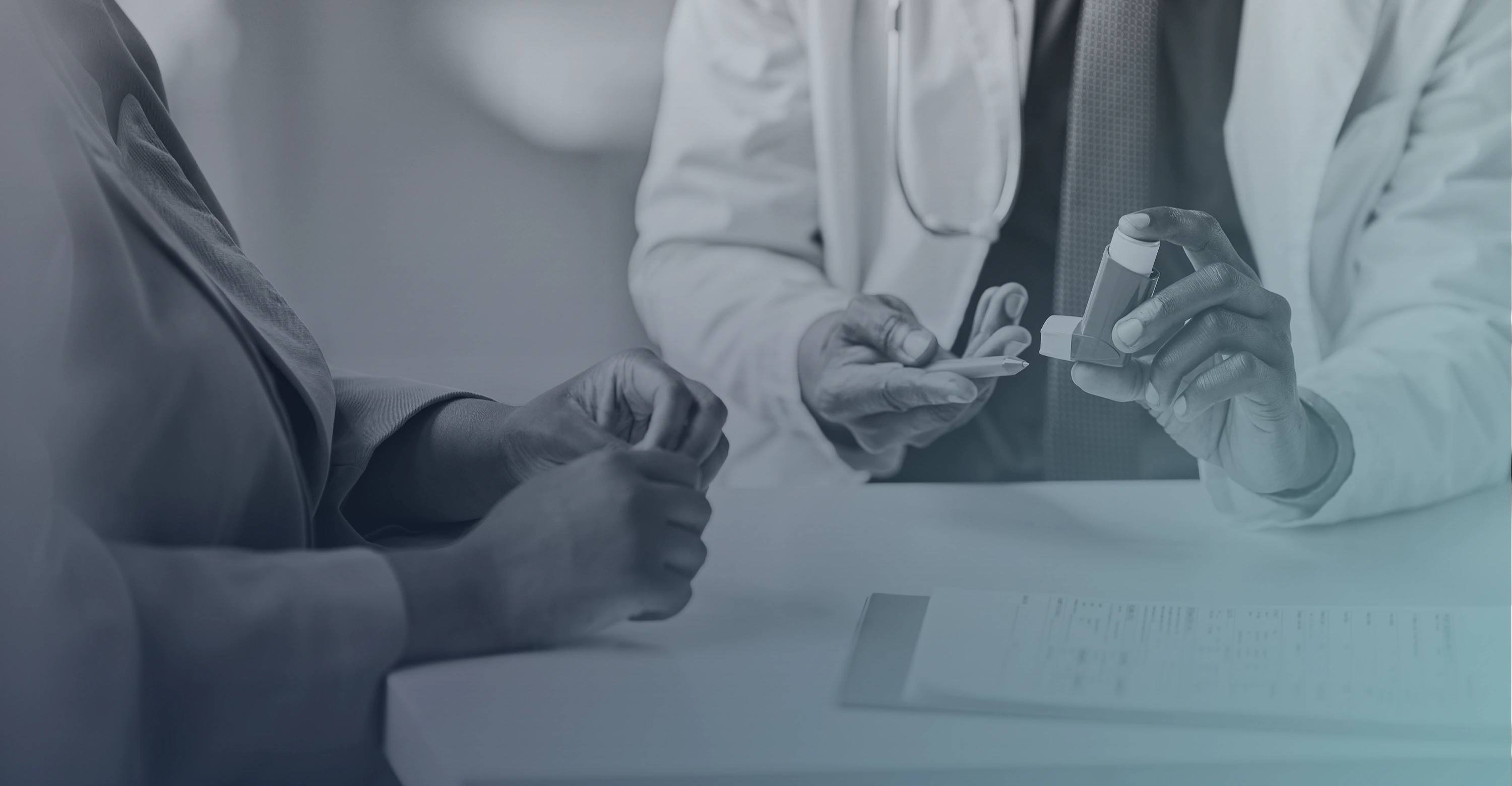
"Doctor, I don't think any of these inhalers work. I've been taking them exactly as prescribed, but this is the sixth time I've been horribly short of breath."
I could have increased his medications, switched him to another inhaler, or ordered more testing. Instead, I pulled up a chair. "I can understand why you're frustrated. Before we change anything, would you mind showing me how you use your inhaler?"
He uncapped the inhaler, pressed it once, barely inhaled the medication, and immediately breathed it back out. There it was — the problem.
This scenario is far more common than many clinicians realize. Incorrect inhaler technique remains one of the biggest barriers to effective treatment for patients with asthma and COPD. Yet many patients aren't intentionally using their inhalers incorrectly. They simply were never shown how.
That clinic visit wasn't about changing medications; it was about communication. One lesson I've learned is to never ask, "Do you know how to use your inhaler?" Most patients will politely answer yes. Instead, ask them to show you.
Watching a patient use their inhaler tells you far more than any yes or no questions ever will. More importantly, it creates an opportunity to teach without making the patient feel embarrassed. Our goal is never to point out mistakes — it's to build confidence.
A simple phrase such as, "Let's go over it together," completely changes the tone of the conversation. Suddenly, it becomes a partnership instead of a correction.
I demonstrated the proper technique once, then asked him to teach it back to me. This "teach-back" method confirmed that he understood each step and gave him confidence to repeat it at home. Before he left, we also shared a QR code linking to a short demonstration video so he could review the technique whenever he needed a refresher.
During his follow-up visit, his symptoms improved. We hadn't changed his inhaler — but changed how he used it.
Experiences like these remind me that teaching is every bit as important as prescribing. This principle extends far beyond inhalers. We ask patients to inject insulin correctly, use CPAP machines correctly every night, apply nicotine patches properly, chew nicotine gums the right way, monitor blood pressure at home, and use countless other treatments that require technique rather than simply taking a pill. Every one of these therapies depends on effective physician-patient communication.
In today's healthcare environment, it's easy to become consumed by ordering tests, reviewing imaging, documenting notes, and adjusting medications. Those tasks are all essential, but sometimes we overlook one of the most powerful interventions available to us: taking a few extra minutes to teach.
As artificial intelligence continues to transform healthcare, many aspects of medicine will undoubtedly become more efficient. Clinical decision support continues to improve; documentation is getting easier, and information has never been more accessible. But there is one thing technology cannot replace: sitting beside a patient, recognizing their frustration, asking them to show you what they're doing, and encouraging them until they feel confident enough to do it on their own.
Patients may not remember every medication you prescribed or every lab you ordered. They will remember the physician who slowed down, listened, and took the time to teach. Sometimes the most effective prescription isn't another medication. Sometimes, it's simply a better conversation.