One of the most common questions I receive from fellows is, "I want to do research, but where do I start?" The good news is that meaningful clinical research no longer requires a laboratory, large grants, or years of prospectively collecting data. Today, numerous high-quality databases and publicly available resources allow fellows to answer clinically relevant questions, publish impactful studies, and build a strong academic portfolio during training.
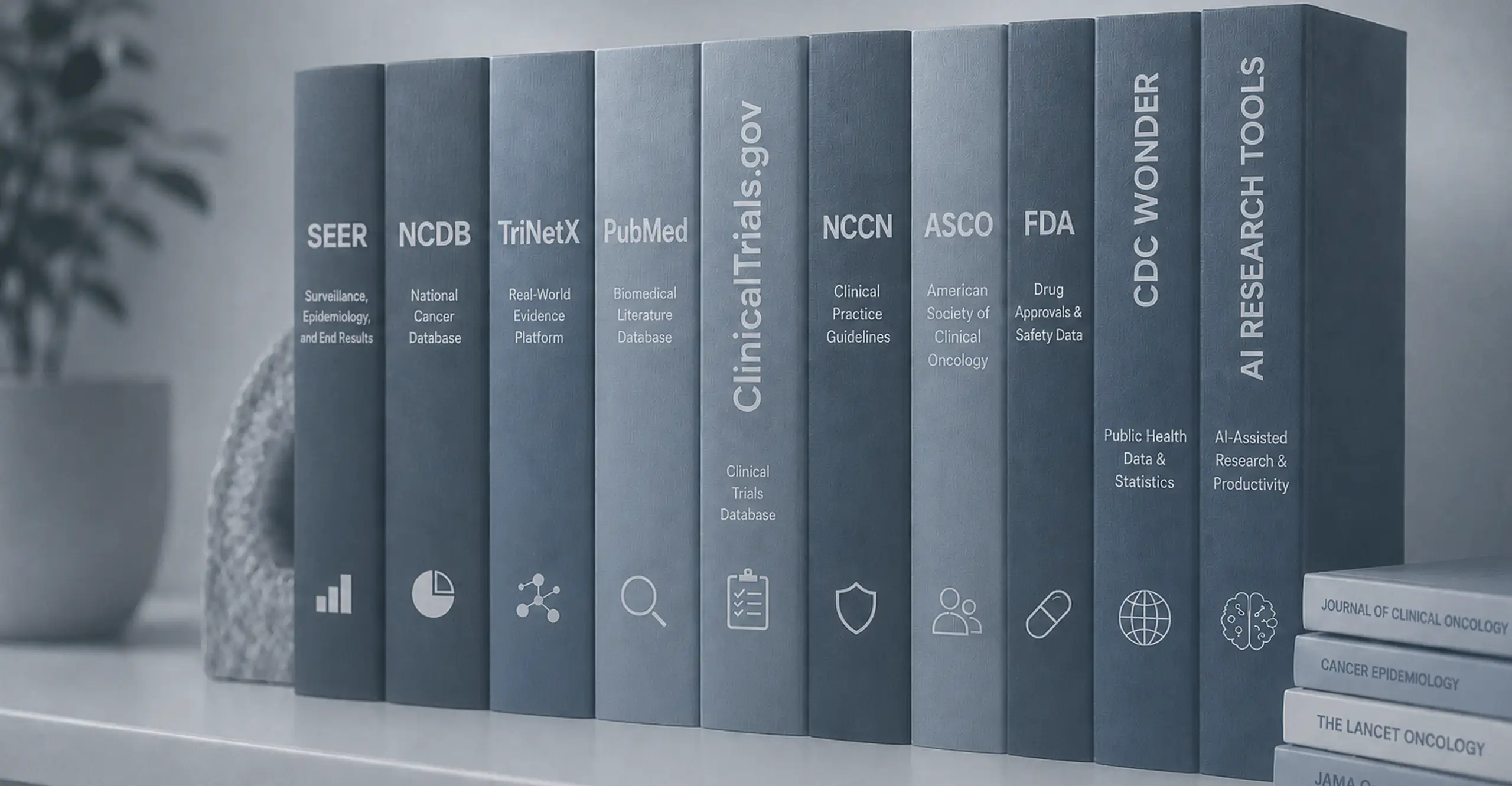
Below are ten research resources that every oncology fellow should become familiar with.
1. SEER Database — seer.cancer.gov
The Surveillance, Epidemiology, and End Results (SEER) Program is one of the best starting points for fellows interested in population-based oncology research. SEER contains detailed information on cancer incidence, demographics, stage, survival, and cause of death across the United States. It is particularly useful for studying epidemiology, survival trends, disparities, and rare cancers. Because it is publicly available and free, it provides an excellent introduction to large database research.
Best for: Epidemiology, survival analyses, health disparities, rare tumors.
2. National Cancer Database (NCDB)
The National Cancer Database captures approximately 70% of newly diagnosed cancers in the United States through Commission on Cancer–accredited institutions. Compared with SEER, NCDB contains richer clinical information, including chemotherapy, radiation therapy, hormone therapy, surgical treatment, margin status, facility characteristics, and comorbidity data. Although individual drugs are not recorded, treatment categories allow investigators to answer numerous clinically relevant questions. Institutional access is required.
Best for: Comparative effectiveness studies, quality improvement, treatment patterns, outcomes research.
3. TriNetX
TriNetX has rapidly become one of the most powerful platforms for real-world evidence research. Unlike many databases, it includes electronic health record data with information on individual medications, laboratory values, diagnoses, procedures, and longitudinal clinical outcomes. One of its greatest advantages is that investigators can perform cohort creation, propensity score matching, Kaplan–Meier analyses, and regression analyses directly within the platform without advanced programming knowledge. Institutional access is required.
Best for: Drug effectiveness, treatment sequencing, safety studies, real-world outcomes, multicenter observational research.
4. CDC WONDER
The CDC Wide-ranging Online Data for Epidemiologic Research (CDC WONDER) provides free access to national mortality and public health datasets. Although often overlooked, it is an outstanding resource for studying cancer mortality trends, geographic variation, age-adjusted death rates, and disparities across demographic groups.
Best for: Mortality studies, public health research, epidemiology.
5. SEER-Medicare
For fellows interested in health services research, SEER-Medicare combines cancer registry data with Medicare claims. This linkage enables evaluation of healthcare utilization, imaging, procedures, costs, treatment patterns, and outcomes in older adults. Access requires an application and data use agreement but opens the door to highly impactful research.
Best for: Health services research, comparative effectiveness, healthcare utilization, cost analyses.
6. Systematic Reviews and Meta-Analyses
Not every important research question requires a database. Systematic reviews and meta-analyses remain among the highest levels of clinical evidence and are excellent projects for fellows beginning academic research. These studies help answer questions where multiple small studies exist but definitive conclusions remain uncertain. They also teach literature appraisal, evidence synthesis, and critical thinking.
Best for: Evidence synthesis, guideline development, identifying knowledge gaps.
7. Narrative and State-of-the-Art Reviews
Review articles are an excellent way to become an expert in a disease area while contributing meaningful scholarship. Writing a high-quality review allows fellows to understand landmark clinical trials, current standards of care, emerging therapies, and future research directions. These articles often generate new research ideas and collaborations.
Best for: Building expertise, academic writing, networking.
8. Institutional Clinical Databases
Many institutions maintain disease-specific registries, tumor registries, biospecimen repositories, or institutional databases that remain underutilized. Although these datasets may be smaller than national databases, they frequently contain detailed clinical variables unavailable elsewhere and can support translational or hypothesis-generating research.
Best for: Single-institution studies, biomarker research, translational projects.
9. ClinicalTrials.gov
Every fellow should routinely explore ClinicalTrials.gov — not only to identify ongoing studies but also to understand trial design, eligibility criteria, endpoints, and evolving treatment strategies. Reviewing active and completed trials helps identify unanswered questions that may become future research opportunities.
Best for: Research planning, clinical trial development, identifying evidence gaps.
10. AI-Assisted Research Tools
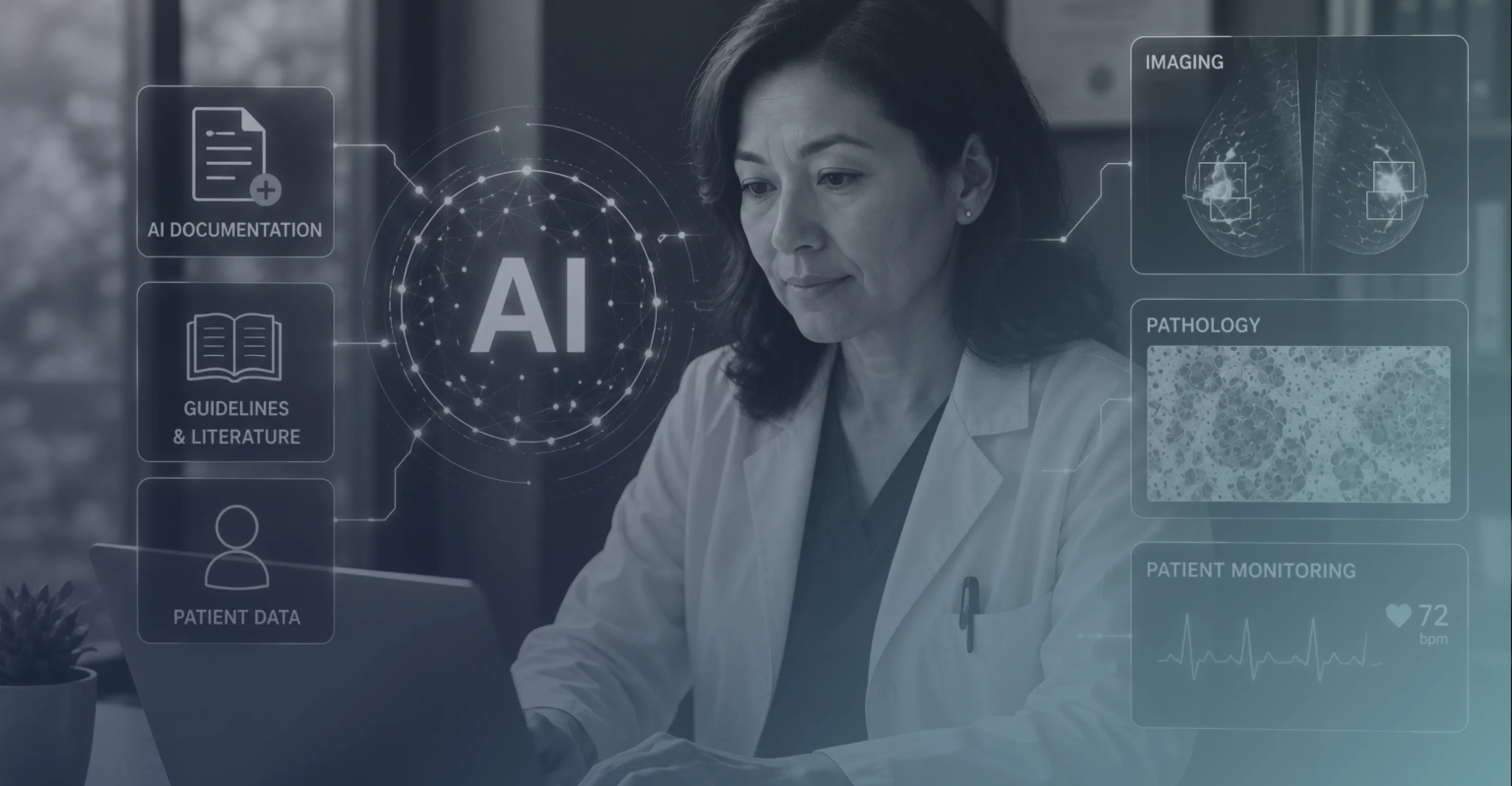
Artificial intelligence is rapidly transforming academic research. Literature-search platforms, reference managers, statistical assistants, and writing support tools can improve efficiency while allowing fellows to focus on scientific thinking rather than repetitive tasks. These technologies should complement — not replace — critical appraisal, statistical rigor, and clinical judgment.
Best for: Literature review, manuscript preparation, research productivity.
Final Thoughts
The biggest barrier to research is often not the lack of ideas — it is simply not knowing where to begin. Today's oncology fellows have access to an unprecedented number of research resources that can answer meaningful clinical questions without requiring years of prospective data collection.
Start with a clinically relevant question. Choose the resource best suited to answer it. Learn the strengths and limitations of each database. Find mentors who have experience with these platforms. Most importantly, don't wait for the "perfect" project. Your first study will teach you skills that make the second one easier, the third one stronger, and your future research program increasingly impactful.
Academic success is rarely built on one landmark paper. It is built through curiosity, consistency, and making the most of the resources already available to you.